Immediate continuity · UPS
Provide power quality and bridging for designated interruption-sensitive loads, verified against the selected UPS architecture.
CRIT / Critical power
Multi-layer resilience that coordinates fast ride-through with sustained backup and safe transfer logic.
01 / Critical power
Start with your actual energy needs. These are design pathways; site conditions determine equipment, capacity and functions.
System configuration / 01
Separate life-support, clinical, IT and building loads; define permitted interruptions, autonomy and maintenance paths for each.
Discuss this configurationGeneral-purpose storage is not a direct replacement for medical critical-load UPS. Qualified engineers must verify local healthcare requirements.
02 / SYSTEM LOGIC
SYSTEM FLOW / CONCEPT
Explain the solution by operating state, not just equipment. The key questions: how it charges by day, supplies at night, and protects loads during local or citywide outages.
Normal source and long-duration support
Ride-through and energy dispatch
Protected by load class
Grid supplies power; UPS supports critical load quality, while storage follows the energy strategy.
Establishes supply paths and load priorities.
Protects power quality and bridges sensitive loads.
Supports energy or peaks within the verified design.
Extends supply subject to fuel and service conditions.
Coordinates states and alarms; dedicated protection remains separate.
Functional overview · wiring, protection and equipment follow the project design.
Provide power quality and bridging for designated interruption-sensitive loads, verified against the selected UPS architecture.
Storage may support energy or peak control; generators supply longer-duration demand. Validate starting, transfer and recharge states.
Protection isolates faults; controls supervise state and interlocks. EMS must not replace dedicated safety protection.
Define it per circuit, rather than claiming zero interruption for a building. Include IT, controls, lifts, pumps and cooling.
Review single failures, bypass, redundancy and maintenance operations. Fault response and normal outage transfer require distinct tests.
Agree tests for loaded transfer, generator-start failure, communication loss and grid restoration, plus alarm and exercise ownership.
Configuration & evidence
Healthcare: protect by load class Separate life-support, clinical, IT and building loads; define permitted interruptions, autonomy and maintenance paths for each. Applicable supply paths + UPS + standby generation + optional BESS + monitoring General-purpose storage is not a direct replacement for medical critical-load UPS. Qualified engineers must verify local healthcare requirements.
Data centres: continuity & maintenance Assess IT and cooling together, including redundant supply paths, maintenance bypass and single points of failure. Distribution paths + UPS + generators + optional storage + facility monitoring Storage equipment alone does not establish a Tier classification or availability target; certification and validation are separate.
Institutions: sustained backup Prioritise communications, emergency coordination, laboratories and refrigeration so limited stored energy serves essential operations first. Critical circuits + UPS/storage + generator coordination + load shedding Duration also depends on fuel logistics, maintenance capability and generator availability.
Permitted interruption: Define it per circuit, rather than claiming zero interruption for a building. Include IT, controls, lifts, pumps and cooling.
Fault & maintenance states: Review single failures, bypass, redundancy and maintenance operations. Fault response and normal outage transfer require distinct tests.
Acceptance & operational ownership: Agree tests for loaded transfer, generator-start failure, communication loss and grid restoration, plus alarm and exercise ownership.
SYSTEM FLOW / CONCEPT
Explain the solution by operating state, not just equipment. The key questions: how it charges by day, supplies at night, and protects loads during local or citywide outages.
Normal source and long-duration support
Ride-through and energy dispatch
Protected by load class
Grid supplies power; UPS supports critical load quality, while storage follows the energy strategy.
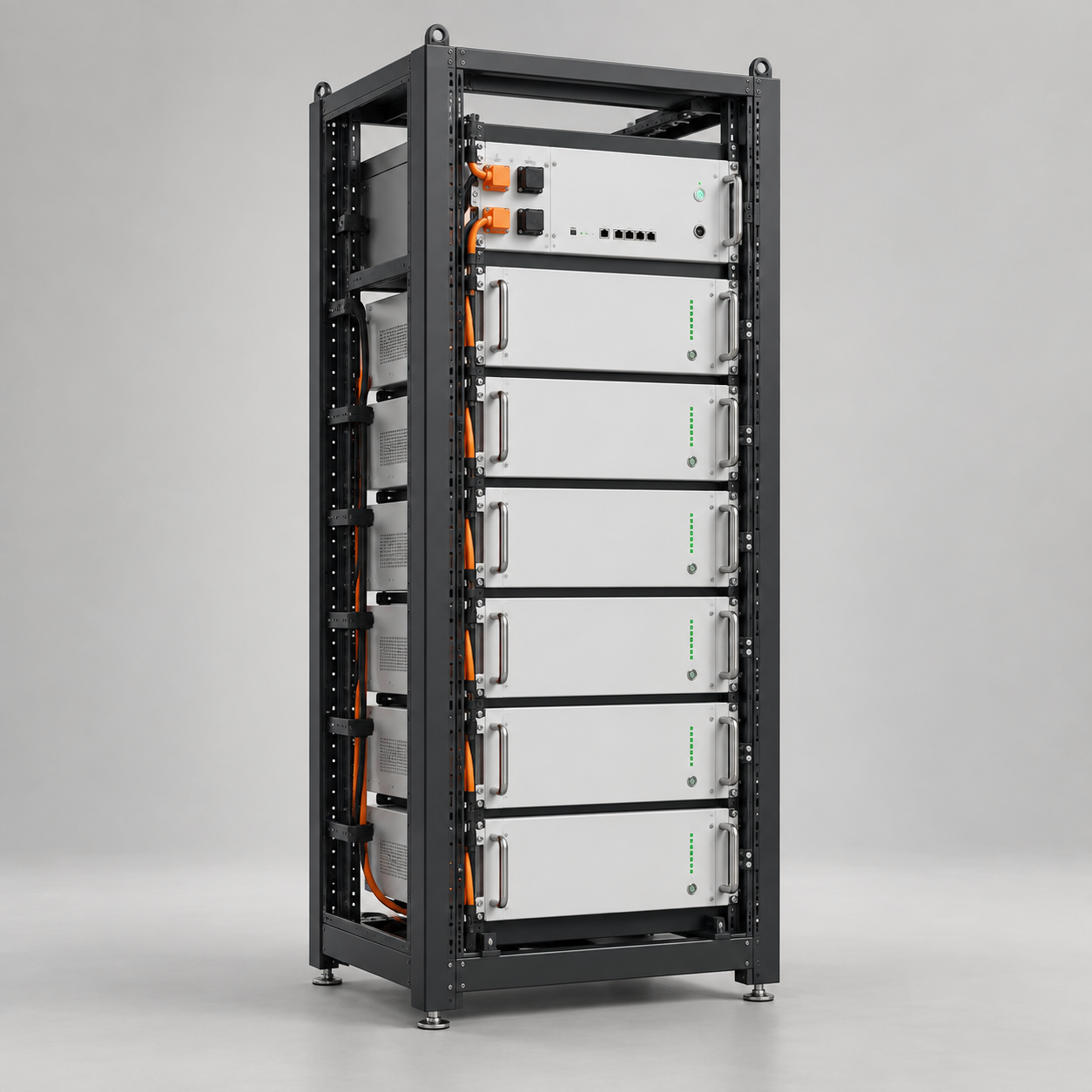
LoadStor / 204.8–716.8 V HV Rack
High-voltage rack-mounted storage batteries based on 280 Ah or 314 Ah cells, covering approximately 57–225 kWh.
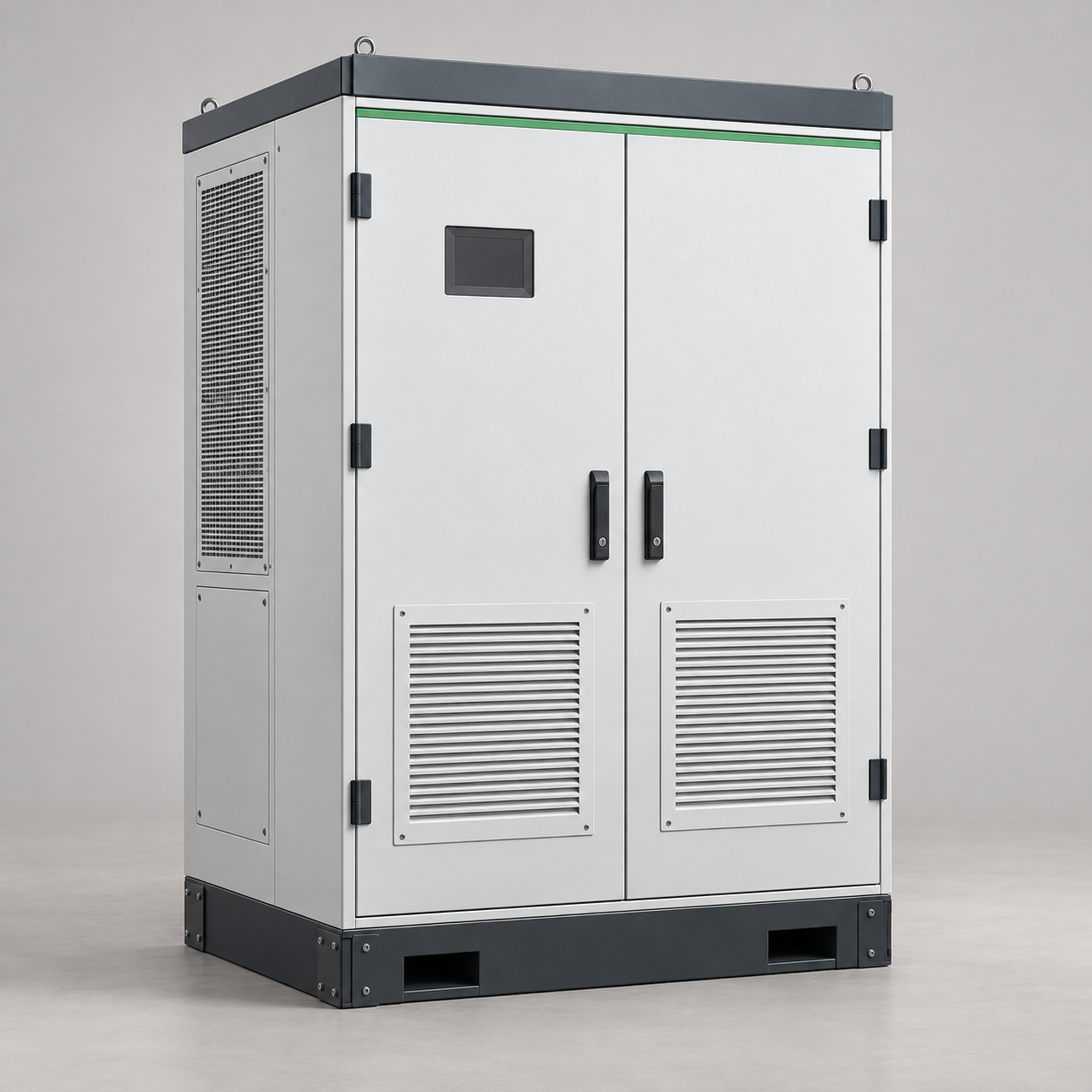
LoadStor / 64–241 kWh C&I ESS
C&I storage cabinets integrating high-voltage battery, BMS and PCS, covering 64–241 kWh energy levels.
LoadStor / DELIVERY
Record location, bills, loads, outages and expansion plans in a reviewable requirements brief.
Agree the single-line diagram, compatibility, sizing basis, operating strategy, scope and assumptions.
Test protection, communications, charge/discharge, backup transfer and recovery within the agreed scope; retain records.
Hand over as-built records, warranties, training, alarm procedures and maintenance plans; service scope is contract-specific.
05 / FAQ
BESS commonly serves energy management and backup; UPS addresses load power quality and continuity. Functional overlap depends on specific products and whole-system validation.
Reliability needs explicit boundaries, failure assumptions and maintenance conditions. Agree targets and validation rather than treating a device specification as a site-wide guarantee.
Project intake
A concise brief is enough. Your submission is stored securely and assigned a reference ID for follow-up.